

First, housekeeping: apologies for the spotty postings lately. I offer the usual excuses as explanation. I hope everyone has had a good summer, and, of course, there is always the back catalog of several years worth of postings to re-read. But I am hoping to pick up the pace again shortly, possibly returning to shorter, more frequent postings. Or longer, deeper postings less frequently. I’m undecided.
In any event, onward…
The Problem
As I’ve said many times before, I don’t want to tell you what to think. Instead, I hope to give you something to think about, and that is the purpose of this posting. You don’t have to agree with me, but I hope by the end you will at least say, “Hmm. Maybe.”
I recently read something that made me stop and say, “See! It’s not just me!”
Let’s face it. As pro-White advocates, we are often made to feel isolated and marginalized. The rest of the world seems to be getting on with “diversity” and “inclusion” and having a grand old time (if we pass over of those parts of European cities where police fear to tread and rape gangs run the city councils, or American cities where White women are slain trying to get home from work by feral excuses for human beings).
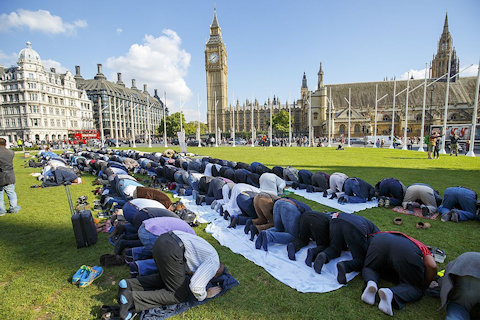
I experienced the problem before I was aware of the problem- if that makes sense. It was a subtle feeling, really an unconscious unease, which only gradually has made it to my waking thoughts: As stated in my post about these United States not being the same United States I grew up in, the demographics have changed. In short, while the population as a whole has increased, there are fewer White people. There are fewer people like me.
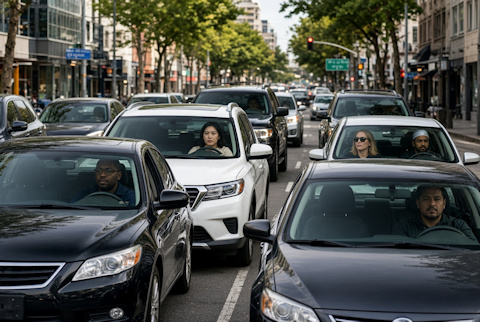
I began to notice this when I looked at other drivers on the road in my neighborhood and the areas of the adjacent city I drive through on a regular basis. Increasingly the people behind the wheel were not White, as they had been, but brown and Asian and other shades of non-White.
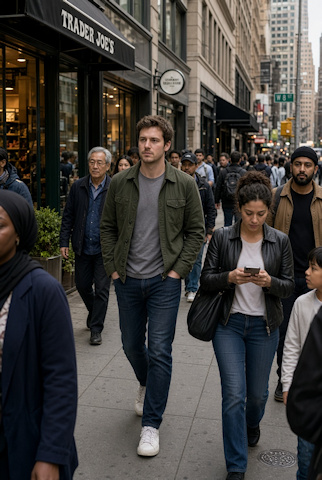
Then I noticed the same thing on the sidewalks and in the stores. We’ve all had that experience where we are interested in something, say a brand of automobile, and suddenly it seems that every other car we see is that brand. The same thing happened to me with race.
But wait! “Diversity Is Our Strength!” we are told. Seeing less White people shows how far we’ve come, right?
It certainly doesn’t feel that way. And that is what this post is about: Instinctive reactions and feelings.
Increasingly, I have found myself withdrawing inward and trying to rationalize my feelings. I felt slightly put out, perhaps even a little defensive. “Where have my people gone?” I wondered. I began to feel like an old White fossil in my own neighborhood, like a relic from the past, and a subtle tension would form across my shoulders and maybe I would use a slightly tighter grip on the steering wheel. Clear signs of stress.
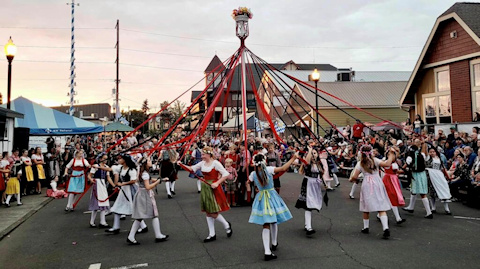
Life has become increasingly stressful for a variety of reasons of course, not just the changing racial demographics in this country, and honestly, I’m not sure I even would have noticed or made the connection but for a couple of experiences recently that served as a counter-point. For example, last year I attended the Oktoberfest in a nearby town that was founded by, and still largely populated with, German emigres. As you might imagine, nearly everyone was White (there were a few Hispanics, as they work on some of the local farms- shocker) and as I sat back and enjoyed a beer, a bratwurst, and some sauerkraut, I found myself relaxing and feeling … well… at home. These were my people.
Likewise, recently I visited a friend in one of the more rural and remote parts of our state. It’s farm country- pure and simple. Hay and hoof. I met the local rancher that runs the largest herd outside of town, who, in a different time, probably would have been running the entire place (and I’m not entirely sure he isn’t now). He was a nice fella. I noticed how clean the town was- no graffiti, no trash on the side of the road, and how pretty the women were behind the counters, and how beefy the men looked. Granted, I did have to get used to the neighbor’s rooster waking me up earlier than I planned, but that only took a day or so and it would have done little good to complain about it anyway: the rooster and chickens belonged to the sheriff.
Again, kicking back on the deck watching the deer shuffle through my friend’s yard (including a young buck- it’s not hunting season yet, so they’re quite relaxed), I felt the tension drain away and a longing to call this home. These were my people and nary a person of color to be found.
Then it was back to the city with all of its “diversity” and its attendant tensions. Was there something wrong with me?
First, let me be clear. I’m not saying that but for so-called racial diversity, our daily lives would be blissful and stress free. Of course not. I am saying, however, that our increasingly “diverse” world is made all the more stressful because of the diversity mishmash. Interestingly, though I am sharing this from a White point of view, the same would likely hold true for blacks, Asians, Hispanics, Jews, and other races: I’m sure the average black feels more comfortable when among other blacks than when he or she is surrounded by a sea of pasty White folks.
The reason for this, it turns out, is likely due in no small part to how we are wired mentally thanks to evolution, and no amount of social engineering is going to change that.
The Reason: Evolutionary mismatch
A recent paper published in Behavioral Sciences, titled, Evolutionary mismatch, stress, and competition: Making sense of psychosocial problems in the polycrisis era, examines how stress, competition and loneliness can be understood through an evolutionary lens. And while it doesn’t mention race once, the implications are clear: being tribal by nature, the human brain evolved for a world of familiar faces, immediate threats and small social groups. And though the world around us has changed radically in recent years, our brains have not. The paper explores the issue of ill-adjustment and “evolutionary mismatch” as it relates to modern life and physiological problems resulting from living in a world for which we are not biologically or mentally adapted. In doing so, it also explains why I feel increased stress when I find myself surrounded by others not of my racial tribe.
It does this by focusing on “evolutionary mismatch”, which was a new term to me. According to the paper, “evolutionary mismatch” describes what happens when human instincts shaped in one kind of environment are forced to operate in a very different one. Humans evolved in smaller, close-knit groups, where danger, belonging, status and trust were read through familiar people and everyday face-to-face signals. Now, those same instincts are being triggered in dense cities, digital platforms, unequal societies and a world shaped by overlapping pressures. The result is an internal confusion: responses that once made sense in a small familiar group can feel out of place, or simply overwhelming, in modern life. A small paleolithic tribe on the shores of the Rhine was going to notice and pay a lot of attention if someone not of the tribe, to say nothing of a Hun or an African, came wandering through the village. Now we are expected to not take any notice if we are standing next to someone who’s ancestors came from the other side of the world.
As the paper says, “Contemporary problems ranging from allergies, myopia, and obesity to chronic anxiety, loneliness, and ultralow fertility can be understood as consequences of evolutionary mismatch intensified by the polycrisis [multiple crises at once], in which accelerating technological and socioeconomic changes push human adaptations beyond what they evolved to handle.”
Part of this “push” is for globalization, racial tolerance, acceptance, and frankly, blending. The problem is, we are not wired to do so. Tolerance is a conscious choice (and potentially legislated behavior). It is something we do because we must.
Acceptance, however, is deeper and more fundamental. And this deeper layer plays into how we have evolved and cannot be easily changed, for it involves attitude, feeling, and instinctive reaction. In other words, while we might consciously tolerate an “other”, acceptance requires much more effort- if it is truly possible at all. From an evolutionary point of view, we are wired to immediately respond to perceived differences. This is a fundamental survival trait wherein it was paramount to be able to differentiate between “friend” or “foe” as quickly as possible. It also explains why I feel more relaxed around a person who is racially different than I if I have spent enough time with them: once I get to know someone, my brain has already performed its adaptive assessment and arrived at a conclusion. This is why it is quite possible to have friends who are of a different race: we see and know them as individuals, but also why it is not possible at the societal level- we instinctively perform that assessment every time an “other” is encountered.
As the paper says: “Adaptations are inherited, species-typical traits that develop reliably and have been retained because they helped to solve survival or reproductive problems better than alternative designs during the period in which they evolved. Our psychology can be understood as consisting of numerous highly specialized, “if–then” information processing mechanisms that take specific environmental cues as input and produce output in the form of thoughts, feelings, and behaviors that enhanced fitness [and survivability], at least in the ancestral environment under evolutionarily familiar conditions.
A classic example is our evolved preference for sweet-tasting things, where the if–then rule would be expressed as if there is sweet-tasting food (input), then eat it immediately (output), which is adaptive in ancestral environments where food was scarce, sweetness indicated calorie-rich sources like ripe fruit, and the urge to eat ensured that valuable sources of nutrition would be consumed before they were gone. As adaptive traits typically evolve over thousands of generations, the environment can change faster than the time needed for adaptations to adjust (i.e., adaptive lag), resulting in mismatches between adaptations and evolutionarily novel environments.”
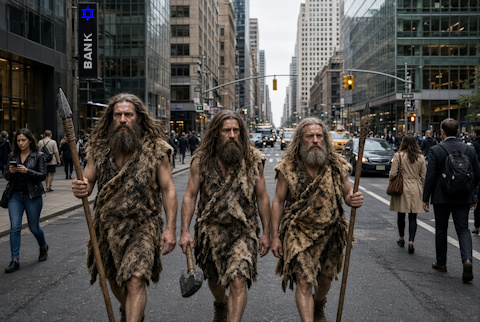
However, as the paper says, evolution takes time- “adaptive traits typically evolve over thousands of generations”. “Ancestral humans lived in kin-based bands of roughly 100–150 people that were highly egalitarian and interdependent. Members of such groups typically knew each other intimately, and status was based less on material accumulation and more on contributions to the group, such as competence and generosity. Under these conditions, social monitoring mechanisms functioned well as status differences were moderate and reversible through compensatory actions (e.g., increased cooperativeness). In contrast, contemporary societies comprise vast, impersonal populations with steep hierarchies and pronounced inequality…Modern technologies expose individuals to a limitless array of others through media and digital networks, continuously broadcasting cues of prestige, wealth, and social success.” They also continually force us to interact with other races and cultures radially different than our own, and try to convey a sense of shame if we recoil from this interaction.
When applied to the issue of modern life and so-called “diversity”, it starts to become clear why I get tense driving down the road or walking into the local store, and more relaxed the further from the city I get and the more homogeneous my environment becomes: my brain is automatically performing an ancient “if-then” analysis of the people around me: If they are different, then they are potentially a threat. If they are the same as me, then they are possibly of my tribe. It is an instinctual, subconscious assessment that happens every time I go outside or view social media.
And the results of that assessment are real: whether I am aware of it or not, my stress level increases or decreases with every assessment because part of me is constantly aware of my surroundings and searching for “other, not me” potential threats. It’s how we evolved so that we might survive. Human biology evolved for a world of movement, nature, and short bursts of stress—not the constant pressure of modern life. Industrial environments overstimulate our stress systems and erode both mental and physical health. Being forced to constantly rub elbows with populations far removed from our ancestral tribes only exacerbates the problem.
Humans are not only vulnerable but also potentially more prone than other animals to evolutionary mismatch due to our tendency to utilize technological and cultural inventions to improve survivability and make life easier. Major revolutions such as agriculture (~12,000 years ago), industry (~250 years ago), and information technology (~50 years ago) have led to significant mismatches between human adaptations and the environment. Considering that even the advent of agriculture was so recent that it constitutes less than 1% of human existence, the technological and cultural changes over the past two centuries will certainly have exacerbated mismatches for our adaptations, which were designed for life in natural settings as nomadic hunter-gatherers in small, kin-based groups. In stark contrast, humans now reside in crowded cities filled with hundreds of thousands of [racial] strangers, operate in highly stratified societies, use social media, and lead sedentary lifestyles.”
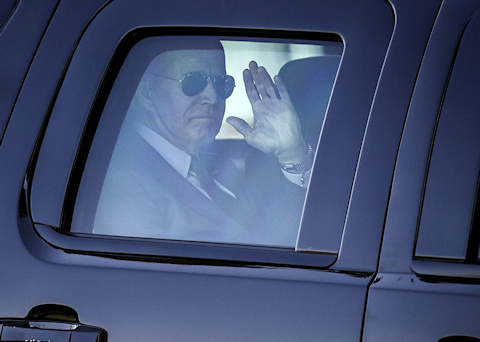
And that’s it in a nutshell, emphasis on small, kin-based groups. The limousine liberals and politicos who have their drivers take them to their homes in gated communities (almost always racially homogeneous) care little about the consequences of busing black kids to White schools, allowing tens of thousands of so-called “refugees” to settle in White neighborhoods, or importing Muslims into White countries, because they don’t have to: they are never faced with the day-to-day consequences like we are. They don’t feel the same stressors.
Humans crave certainty, which drives the search for information and resources that make the world feel coherent and predictable. Excesses are difficult to ignore and can overwhelm the cognitive systems designed to filter and prioritize information. When extended to the social realm, humans evolved to live in tightly knit groups where nearly all social events were personally relevant, making us predisposed to treat even trivial social information as important.
Now we are being asked to forego this evolutionary impulse and treat all groups and races as if they were are own. They are not. And that disparity plays out in a number of ways, not least of which being a constant sense of stress and exhaustion from hyper-awareness. Even if you try to just go about your business and stick to your own agenda, the powers-that-be force “diversity” down your throat, demanding your attention.
Case in point: In my neck of the woods, it is still predominately White and mostly Christian. By a large margin. And yet, our local school district (slowly being taken over by the DSA by the way, but that’s a story for a different time) asks us to avoid scheduling events of any kind on and to recognize holidays for: Rosh Hashannah (though Jews only make up 1.6% of the entire population in our State), Yom Kippur, Indigenous People’s Day (Native Americans make up 1.1% of the our population), Diwali (Hindu’s make up 0.5% of the population in our area), Native American Heritage Day, Hanukkah, Kwanzaa (a holiday made up in 1966 by a Black separatist after the Watts riots. Blacks make up 3% of the population in this area), Lunar New Year (Chinese make up 4% of our state population, and 8% in our largest city), Ramadan (Muslims make up 1% of our local population), Purim (another Jewish holiday), Eid al-Fitr (an Islamic holiday), Eid al-Adha, Passover, and of course, Juneteenth. Ug.
It’s amazing there are any school days left. More to the point, because I work with many people who are impacted by this holiday schedule, I am too. I’m simply trying to put food on the table for my White family, but heaven help me if I try to schedule an appointment on Juneteenth. Awareness of that which I am not a part of is required. I experience “evolutionary mismatch” every day.
Conclusion
As a National Socialist, sometimes I look at the Socialist part of the equation, and sometimes the National. It is the latter that has occupied me recently and with which we are concerned here. It is important to remember there is a distinction between State and Nation. Any racial mix can be made to form a State, for it is a political entity. A Nation, on the other hand, transcends State boundaries and is comprised of a homogeneous group of people who share biological kinship, historical connections, and cultural underpinnings. It is what the Germans called Volksgemeinschaft. It is also one of the things that separates National Socialism from other types of so-called Socialism (more often as not, Communist at its core), which tries to paint with a brush so broad that it ignores our true evolutionary nature. National Socialism is founded in natural law, understanding and incorporating our fundamental biological and evolutionary nature and its inherent strengths and limitations.
From a State point of view, other races have every right to live where they wish in our country, drive on the roads, and demand we pay attention to their holidays. But from the Nationalist, and evolutionary or natural perspective, that does not mean these are good ideas. Forced racial mixing at the State level is not what we are evolved to accept at the National level. It is yet another reason why the ANP’s demand for “an all-White National Socialist America” makes sense: it’s how we’re wired.
I still notice the “others” while I’m driving and out in public. But at least now I can take some solace, and perhaps even a little pride, in knowing that my inherent reaction is not a lack of tolerance or a “bad attitude.” It’s how I’m wired. Indeed, it is likely that everyone around me feels the same way to some degree- whether they are aware of it or not. The next time you look around and find yourself floundering in a sea of multi-ethnic slop, remember: it’s not just you. Embrace how you feel. After all, it’s only natural.
Amerika Erwache!
SUBSCRIBE TO THIS BLOG
(It’s free, and mostly painless)


Leave a Reply