
Earlier this week, January 27th, was International Holocaust Remembrance Day.
Somehow, I missed it. I must have been doing something more important, like cleaning up after my dog, watching TV, or picking my nose.

And while brief mention was made hither and yon in the media, generally it seemed to pass by with less than the usual fanfare. This could be for a couple of reasons: Possibly the left is having a hard time playing the annual Holocaust card while simultaneously wringing their hands about Israeli sponsored genocide in Gaza. Maybe Muslims are more in vogue now, thanks to such rock-stars and intellectual heavy weights as Zohran Mamdani and Ilhan Omar. Perhaps the Jew fatigue is real and people are just tired of this incredibly small but exceedingly obnoxious minority sucking the air out of the room. Or, maybe, just maybe, people are starting to recognize the truth: The Holocaust narrative is largely a fabricated story designed to facilitate fundraising and political concessions.
To elaborate on this latter point, I would like to share a somewhat abridged version of an article I wrote for the December 2025 issue of The White Worker, titled: Removing The Dark Stain of the Holocaust.
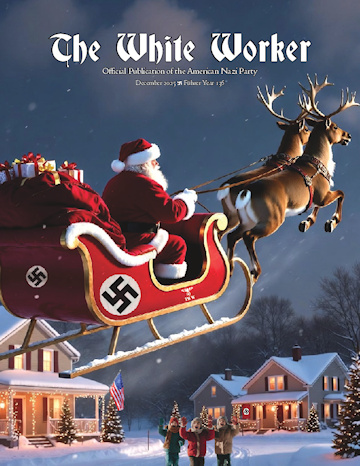
For context, last year was the 80th anniversary of the liberation of Auschwitz, now a theme-park in Poland. To mark this auspicious anniversary (cough), each issue of The White Worker in 2025 featured an article debunking, examining, or discussing some aspect of the so-called Holocaust. My article tried to tie it all together and answer a couple of questions: What is the real motivation behind the never-ending Holocaust narrative? Why would they lie, what is the truth, and what can be done going forward?
Let’s dive in.

Removing The Dark Stain Of The Holocaust
by Johann Rhein
A Year In Review
Finally, year-end! 2025 marked the 80th anniversary of the “liberation” of Auschwitz, providing endless opportunities for the Holocaust Industrial Complex and Zionist apologists to trot out “survivors” and guilt-trip Whites, primarily Germans, into opening their wallets and sending more money to history’s perpetual professional victims: the Jews.
The timing could not have been better for them, as wrapping their race in the Holocaust myth served to forestall or redirect criticism of Israel’s Great Gaza Land Grab: anyone critical of Zionist expansion was immediately called “antisemitic” and branded a “Nazi”: media figures were canceled and fired; universities were defunded; new “Holocaust education” requirements and materials were quickly drawn up and sent to public schools under the Holocaust Education and Antisemitism Lessons Act (aka HEAL); and so on. I did a cursory web search for “Holocaust” when writing this article, and it returned over 2.9 million hits- for this year alone. “Jew fatigue” anyone?
To push back against this nonsense, every issue of The White Worker this year [2025] has included an article focused on debunking a Holocaust lie or illuminating some dark corner of Holocaust mythology.
Lies vs The Truth
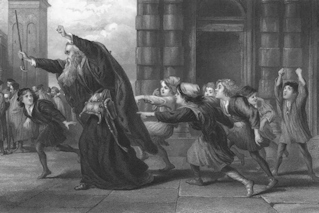
There is an expression, appropriately from Shakespeare’s The Merchant of Venice, which reads “truth will out.” But when Jews control most of the media and platforms of mass communication, sometimes the truth needs a helping hand. That is why we felt compelled to counter the Holocaust narrative, particularly this year: Without an active effort to do so, the lies would go unanswered and be mistaken for the truth.
As Thomas Dalton says in The Holocaust: An Introduction:
“One striking fact is this: Most people have no idea that there is a Holocaust mystery at all. This in itself testifies to the power and influence of the traditionalists. They work hard to ensure that most of the public never hears from the other side—nor even that there is another side. When the topic does slip out, as it does from time to time, it is always dealt with in the most denigrating and insulting of terms. Revisionists are invariably called “Holocaust deniers,” “neo-Nazis,” or “antisemites.” They are slandered and impugned from the start. But their arguments are never discussed, never challenged, and never refuted. This, of course, is the classic ad hominem fallacy: to attack your opponent’s character or motives, rather than addressing the substance of his arguments. This is a standard tactic of those who have weak counterarguments, or who wish to avoid discussing the topic at all.”
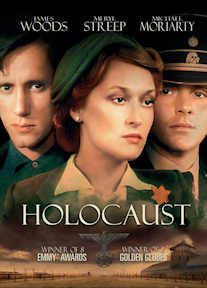
I will be completely honest: like most people of my generation, I grew up believing the lies. In my defense, with the endless stream of Jewish-produced Holocaust narratives in books and films, how could one not? When I worked at the local video store, many elderly Jewish people brought their film choices to the check-out counter with their forearms proudly displayed to show off their camp registration tattoos in the hopes of getting a free rental, which they often did. When I attended college, there was a Holocaust studies class featuring “survivors” as guest speakers, and required reading included the works of Elie Wiesel and Primo Levi. On the television at home, at my workplace, and in my college classes: the Holocaust was everywhere.
And their lies worked. Being of Germanic heritage on my father’s side, I grew up admiring the Germans generally and desperately wanted to see them as the “good guys”. I felt drawn to them. I liked their martial nature. I admired their focus and cultural achievements. More importantly, I empathized with them and felt an instinctive kinship to the people and their society. Hell, I liked their aesthetics: from the uniforms to the tanks, from the torchlight parades to the very shape of their submarines, the Germans just looked cool. With the whole world arrayed against them, they were the valiant underdog, fighting to the last.
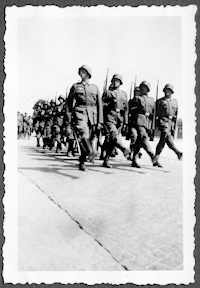
But, like a dark stain on an otherwise clean white shirt, the Holocaust colored everything.
It was impossible to truly feel connected to the Third Reich. I often found myself thinking, “If only they hadn’t tried to exterminate the Jews.” Without the Holocaust, the actions of the Germans become noble, laudable, and—more importantly—understandable: sandwiched between two intractable and perpetual foes (France and Russia), Germany has long felt the need to bolster and defend its position in Europe; the Treaty of Versailles was little more than an egregious example of ‘victor’s justice’ and rightly provoked Germans to respond forcefully (it further exacerbated the problem for me that a large part of the Germans in my bloodline are from that European football known as Alsace); and history has long since proved Hitler was right: the true menace to Europe and world peace was the Soviet Union, not National Socialist Germany.
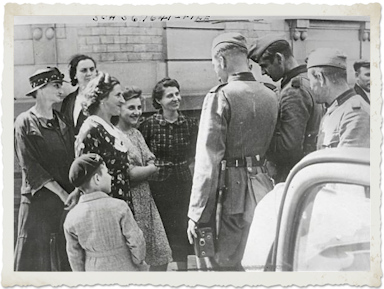
And he was right about the Jews too: an honest examination of the post-war world and the deliberate erosion of White values and culture, to say nothing of geopolitical misadventures and the replacement of the appreciation of virtue and honor with worship of the shekel, points directly to this Semitic minority.
Eventually, as I grew older and recognized the Semitic danger to our race and country, I began to embrace National Socialist Germany lock, stock, and barrel, including the Holocaust. Without going into the weeds, suffice it to say that early in my “awakening” I still believed the six-million lie and all of its trappings. While bewildered that Germans would spend the resources necessary to implement a “final solution” to the Jewish problem while fighting on multiple fronts simultaneously (this made no sense and was one of the cracks in the narrative that eventually led me to the truth), I reconciled myself to it and reasoned that, however harsh it may seem, sometimes it is necessary to remove the limb to save the body and that post-war world history more than proved Hitler was right in his condemnation of the Jewish people. They were, and still are, a bacillus and a threat to the well-being of mankind generally and White people in particular. When people learned of my support of National Socialist Germany and challenged me on the Holocaust, my answer was short and heartfelt: “Six hundred or six million, it doesn’t matter. Whatever the number, it clearly wasn’t enough.”
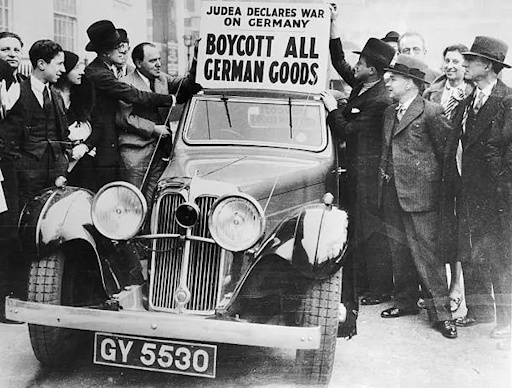
This answer was unfortunate, as it had two immediate effects: it shut down further conversation and unintentionally perpetuated the lie. For those who, like my earlier self, were drawn to National Socialism but had yet to reconcile themselves to a worldview which demands, at times, harsh and comprehensive action, this answer does nothing to alleviate their concerns and remove the “dark stain”.
Fortunately, I no longer give this “shock and awe” answer, and I encourage you not to either. We have something even more powerful on our side: the truth. In short, the Holocaust did not happen: not as told by the Jews and not as described in the Nürnberg Show Trials. This is not to say crimes did not happen—of course they did. On all sides. This is not to say Jews were not targeted for ill-treatment—of course they were. This is not to say Jews did not die. They did. But it was not “the systematic, state-sponsored persecution and murder of six million Jews by the Nazi regime and its collaborators between 1933 and 1945 across Europe and North Africa” as the Holocaust is defined by Yad Vashem. The truth matters. The truth removes the “dark stain” that troubled me in my youth.
As Thomas Dalton says:
“Consider this fact. The Second World War in Europe ran from September 1939 to May 1945—a period of 5 years and 8 months, or slightly more than 2,000 days. If the Germans killed 6 million Jews in the course of those 2,000 days, they must have averaged 3,000 Jews per day, every single day, for the full extent of the war. This is a truly astounding statistic: 3,000 Jews murdered every day, by some combination of gassing, shooting, and deprivation—for nearly six straight years. Is this plausible? But the larger issue is that of body disposal. Killing is relatively easy; making bodies vanish is much, much harder. On the standard view, the Germans burned, buried, or otherwise totally disposed of 3,000 corpses (on average) every single day— for nearly six years. This would have been a monumental job in peacetime; it was a Herculean task in the midst of a major war. This alone should make us question the conventional death toll.
“So what?” some may say. “Something like 50 million people died in the course of the war, which is an even more amazing 25,000 per day. Why not 3,000 Jews?” Yes, but the larger figure includes all victims in all conflicts, everywhere on the globe. There were 58 national militaries at war, involving millions of soldiers, many of whom were shooting everything in sight. We can thus easily understand how 50 million people, globally, may have died. But the Jews were targeted by a single nation, one that was busy fighting battles on many fronts. Furthermore, and critically, none of the 50 million dead bodies was made to vanish—unlike the 6 million unfortunate ones.
[Furthermore], we need to state the obvious. People die all the time. They die from old age, disease, injury, and accident. They die from homicide, and they die from suicide. In any sufficiently large population group, about 1% die of such causes every year. Among the areas that would come under German control, there lived about 9 million Jews, according to standard sources. Therefore, this Jewish population would have experienced something like 90,000 deaths per year— even if Hitler had never been born. Over the course of the war, roughly 520,000 Jews would have died, even if the Germans completely ignored them. And if we count the time since the Nazis came to power in 1933, some 1.3 million would have died. Since our experts give us so few details, we have to assume that any Jew that died during the Nazi era, for any reason, counts as a “Holocaust victim.” We therefore have over 1 million victims before we even count a single Nazi murder.
Any fair accounting of Jewish mortality would subtract the 1 million or so natural deaths from the putative total. But this never happens. This also helps to explain those who say, “My so-and-so relative(s) died in the Holocaust.” What they mean, most likely, is that they died during the Nazi era, probably of natural causes. But the blame goes to Hitler all the same. Is this reasonable? Clearly not. But until we get details regarding who died, when, and how, we cannot determine the reality of the situation.”
These facts, and the detailed articles published [in The White Worker throughout 2025], are exactly why discussing the Holocaust is so problematic for Jews: it opens the door to doubt. It invites critical examination, and the standard Holocaust narrative does not hold up against such inquiry. Simply put, the numbers don’t add up.
Follow The Money
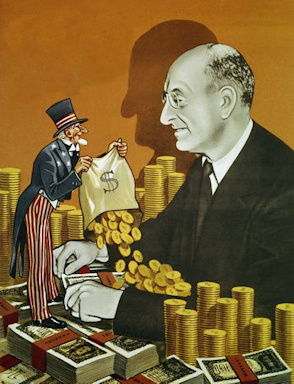
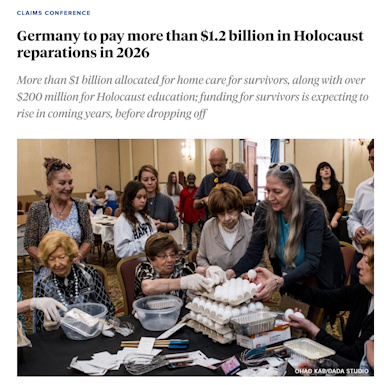
This presents a costly problem for Jews. Literally. When one asks, “What purpose is served by perpetuating a lie such as the Holocaust”, I can give you 95 billion reasons. Even before the Second World War ended, governmental bodies were discussing how to compensate the Jews. Future Israeli political leaders communicated with the United States and England about receiving reparations from Germany. Dr. Chaim Weizmann, head of the Zionist Organization (now the World Zionist Organization) and future president of Israel, sent a letter dated September 20, 1945, to the Allies for restitution of $8 billion. The $8 billion was a number estimated by Dr. Nehemiah Robinson, head of the Institution of Jewish Affairs of the World Jewish Congress, of the money Nazis stole from Jews, either from stolen homes, jewelry, art, and compensation for material damages to the Jews as a nation. Eventually, in 1951, the different pro-Jewish groups clamoring for compensation were aggregated into the Conference on Jewish Material Claims Against Germany, known as the Claims Conference.
“Compensation” from West Germany began in 1952 and continues in one form or another to this day. To date, the German government has paid over $95 billion in compensation and restitution, including payments to individuals, social welfare services, property restitution, donations to specific funds and charities (the Hardship Fund, and the Child Survivor Fund for example), as well as facilitating settlements with private companies that used wartime forced labor.
Furthermore, the creation and survival of Israel was dependent on extracting money from Germany. Established in May of 1948, Israel quickly found itself fighting neighboring Arabs in what became known as the Arab-Israeli War. It ended in 1949, with settlements negotiated separately between Israel and each of the invading countries: Egypt, Jordan, Lebanon, and Syria. These agreements, particularly the one with Jordan, which formalized the division of Jerusalem and the control of the West Bank, set the stage for the geopolitical realities that persist today. It also left Israel financially destitute.
Reparations To The Rescue
As noted above, reparations from Germany began in 1952. The payments were made to the State of Israel as the heir to those victims who had no surviving family. The money was invested in the country’s infrastructure and played an important role in establishing the economy of the new state. The reparations were paid directly to the headquarters of the Israeli purchase delegation in Cologne, which received the money from the German government in annual installments. The delegation then bought goods and shipped them to Israel, receiving its orders from a Tel Aviv-based company that had been set up to decide what to purchase and for whom. This included equipment and raw materials for companies owned by the Israeli government (known as the Jewish Agency). Reparations money funded at least one-third of Israel’s electrical system and half of the total investment in Israel’s railways, which used German-made rolling stock, tracks, and signaling equipment.
Furthermore:
“Reparations were also used to purchase German-made machinery for developing the water supply, oil drilling, mining equipment for use in extracting copper from the Timna Valley mines, and heavy equipment for agriculture and construction such as combines, tractors, and trucks. About 30% of the reparations money went into buying fuel, while 17% was used to purchase ships for the Israeli merchant fleet; some fifty ships, including two passenger liners, were purchased and by 1961 these vessels constituted two-thirds of the Israeli merchant marine. Funds from the reparations were also used for port development; the Port of Haifa was able to obtain new cranes, including a floating crane that was named Bar Kokhba. The Bank of Israel credited the reparations for about 15% of Israel’s GNP growth and the creation of 45,000 jobs during the [first] 12-year period they had been in effect.” (Wikipedia)
In short, without a Holocaust guilt-trip to extract money from post-war Germany, the Israel we know and loath today would not exist.
The Holocaust: The Gift That Keeps On Giving
Of course, pecuniary gain does not prove the Holocaust was a lie: the facts used in the articles published in The White Worker in 2025, and the works they reference, do that. However, it does help to explain why they cling so desperately to their false narrative. Jews literally have an (in)vested interest.
But I think there is another reason as well—I believe it is in their nature. Most races and civilizations have achievements from which they take pride and draw inspiration. Whether it’s the rise and fall of the Roman Empire, or the global dominance of Victorian Britain, or the carving out of the frontier wilderness a great nation, White history is replete with valiant effort and notable achievement. We see ourselves as the masters of our own destiny and take pride in our history.
On the other hand, Jews, needing something to hang their racial hat on and seeing themselves as perpetual victims, have the Holocaust. And what a lucrative hatrack it has been: $95 billion and counting, and a country too! They take pride in being stepped on and then counting the shekels they get in compensation. They wrap their racial being in the tattered flag of victimhood and demand special treatment, insisting any actions they take, any country they invade, or any industry they destroy for profit is justified because they were singled out for “persecution.” They have made a profession and political strategy of playing off people’s sympathy. Having finally captured the goose that lays golden eggs—the Holocaust—they are never going to let go of it. But we can.
Hold Firm: Speak The Truth
Good news: nearly 50% of all “Holocaust survivors” will pass away within the next six years, while 70% will die within 10 years and 90% within 15 years. As the expression goes, “Don’t let the door hit you on the way out.” Increasingly, “The Shoah” (the Holocaust as a religion) is becoming ancient history, akin to their flight from Egypt or their captivity in Babylon.
As history marches on, opportunities will present themselves for frank and open discussion. We must be mindful of this and avail ourselves of every chance to set the record straight. As I have said many times, the truth is on our side.
The Jews, of course, will continue to worship their “Holocaust”. Now part of their mythology, like Passover and the parting of the Red Sea, it will never go away. But we do not answer their lies with the truth for their benefit; we do it for our own. Our freedom and our future demand it. As Dr. Stäglich says:
“The ultimate achievement of propaganda is, as Emil Mair-Dorn has so vividly put it, to ‘make millions of people eagerly forge the chains of their own servitude.’
A most depressing example of a people forging its own chains is to be seen in the almost fanatical tenacity with which so many Germans cling to feelings of guilt that have been implanted in them about an epoch in which bitter necessity impelled the German people to seek an independent path to the future. Many things go into the make-up our national guilt complex, but more than anything else it is the product of deliberate misinformation about the German past. As a result of this artificial and utterly baseless guilt complex, at no time since the fall of the Third Reich has the German people been able to bring itself to pursue its own political interests.”
One does not have to look hard to see that Dr. Stäglich’s words apply equally well to Whites generally and the Holocaust as a whole. To be masters of our own destiny, we must understand and value our past. The lies, the “dark stain”, is a deliberate attempt to prevent Whites from ever feeling a sense of pride in their race and nation again. White Pride is anathema to Jews, and the Holocaust lie is one tool they use to keep it in check. But as Theis Christophersen said, “Our people, especially our children, must be freed from the feeling of guilt being forced upon them by the victors of the last war—and it is only the truth that will make them free.”
As the expression goes, “The Truth Is Out There.” It is our duty to find and share it: for our race, for ourselves, for our children, and for our future.
Amerika Erwache!
SUBSCRIBE TO THIS BLOG
(It’s free, and mostly painless)


Leave a Reply